How to reduce the risk of gel nail allergies
Every professional nail technician wants the same result: beautiful, durable nails without compromising the wellbeing of clients or the technician. Understanding where exposure occurs makes it easier to build safer habits into every treatment, without making promises that no professional product can guarantee.
What is a gel nail allergy?
A gel nail allergy is a form of allergic contact dermatitis. It develops when the immune system becomes sensitised to a substance that has touched the skin. In artificial nail systems, the relevant substances are often acrylates or methacrylates, the reactive ingredients that help gel and gel polish form a durable coating when cured.
Possible symptoms include redness, itching, swelling, dry or cracked skin, blisters and lifting of the nail. Reactions may occur around the fingers and nails, but also on the eyelids, face or neck after these areas are touched.
Sensitisation can build over time. A nail technician or client may use nail products for months or years before symptoms appear. Once an allergy has developed, future contact with the allergen can trigger another reaction. This is why prevention is especially important for professionals who work with uncured products every day.
What causes nail gel allergies?
Most cases are not explained by one product claim or one ingredient alone. The practical risk is shaped by how often uncured product reaches the skin and whether the complete system cures as intended.
Skin contact during application
Direct skin contact is one of the most important avoidable exposure routes. Flooding the cuticle, touching gel with bare fingers, wiping product across the skin or working with contaminated gloves and tools can expose the technician or client to reactive ingredients. Even small exposures can become relevant when they are repeated frequently
Insufficient curing
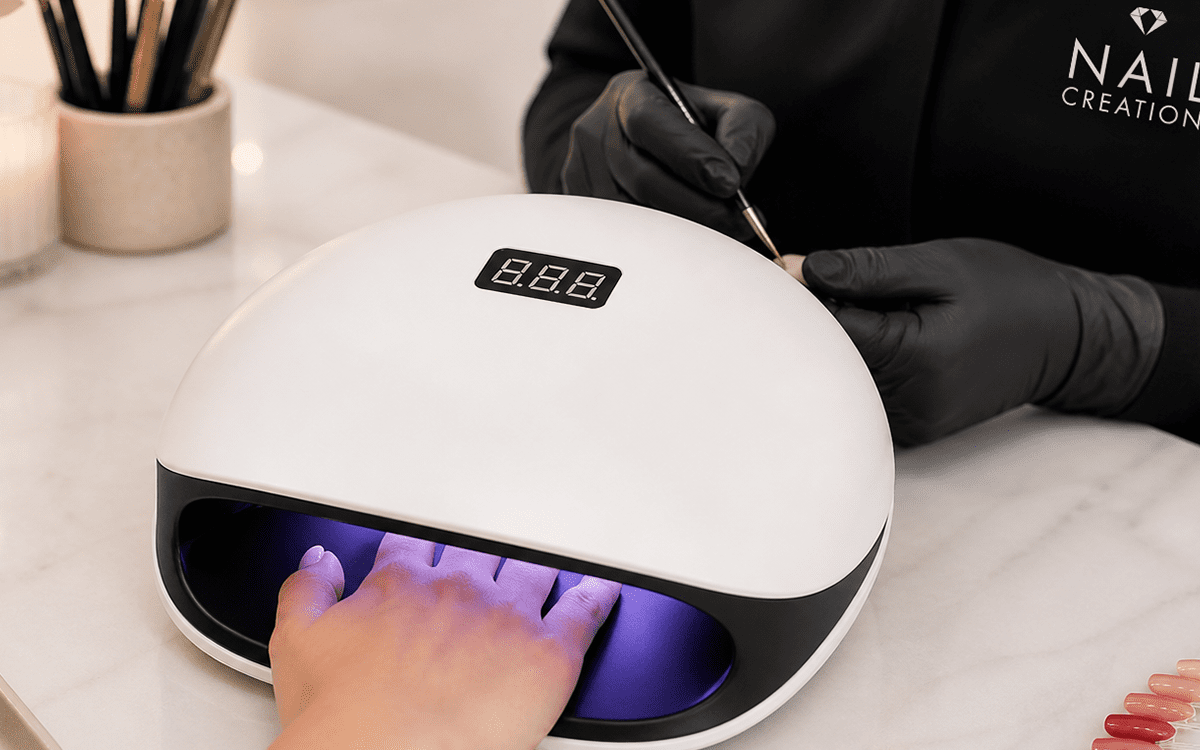
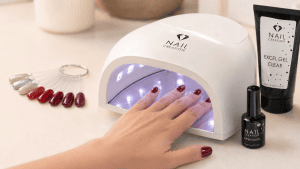
Gel can look hard and glossy while still being insufficiently cured underneath. Risk factors include using an incompatible lamp, curing for less time than instructed, applying layers that are too thick or mixing products from systems that have not been tested together.
Poor application technique
Nail technicians handle products far more often than an individual client. Small spills, uncured residue on bottle necks, used wipes and contaminated surfaces can therefore add up. A clean, no-touch workflow helps reduce unnecessary exposure during every service.
Product quality and transparency
Products from an unclear source, with incomplete labels or without reliable curing guidance, make it harder for a nail technician to control exposure. Compliance with cosmetic regulations is essential, but it does not mean that an allergic reaction is impossible. Professional use still requires training, careful application and complete curing.
Why ingredient transparency matters
Ingredient transparency helps nail professionals understand what they are using, answer client questions and provide useful information if a reaction occurs. A professional brand should make the following information easy to find:
- Full ingredient lists (INCI)
- Safety information
- Curing instructions
- Regulatory compliance
- Product compatibility
Free-from claims can help professionals compare formulas, but they should never be interpreted as a guarantee that a product cannot cause an allergy. Clear information is most valuable when it is combined with correct technique and realistic communication
Can gel nail allergies be prevented?
No product can guarantee that an allergy will never occur. Incorrect use and repeated skin contact can still cause problems. Professional brands support safer work through consistent formulas, clear instructions and product development. Combine good products with careful technique.
At Nail Creation, we combine professional products with clear guidance. This helps nail technicians use our products correctly and confidently.
Shop Nail Creation!
What should you do if you suspect an allergy?
Stop using the product if you or your client develops lasting redness, itching, swelling or blisters. Advise the client to contact a medical professional. Never diagnose an allergy yourself.
Reduce further exposure and seek medical advice if you develop symptoms. Continued contact with uncured products may make the reaction worse.
How do you choose professional nail products?
Choose products that allow you to work consistently and follow a complete professional protocol. Reliable performance, clear instructions and careful technique should always be considered together. This helps nail technicians work efficiently and confidently while reducing unnecessary exposure for themselves and their clients.
Nail Creation has developed professional nail products since 1993. Our systems are developed and manufactured in our own factory in the Netherlands, where in-house research, production and quality control help us deliver consistent formulas for professional salon work.
Shop Nail Creation!Frequently asked questions about gel nail allergies
Can a gel nail allergy develop after years of use?
Yes. Allergic sensitisation can develop gradually after repeated exposure, so months or years of trouble-free treatments do not rule out a later reaction. Consistently preventing uncured product from touching the skin remains important throughout a nail technician’s career.
What are the first signs of a gel nail allergy?
Possible signs include itching, redness, swelling, dry or cracked skin, small blisters and lifting of the nail. Symptoms may appear around the nails and fingers, but can also occur on the eyelids, face or neck after these areas are touched. Stop further exposure and advise the person to contact a doctor or dermatologist if symptoms persist.
Is every reaction to gel nail products an allergy?
No. Irritant contact dermatitis, mechanical damage and other skin or nail conditions can look similar to an allergy. A doctor or dermatologist should make the diagnosis and may recommend professional patch testing to identify the responsible allergen.
Can you switch to another gel product after a suspected reaction?
Do not simply switch to another gel product. First, seek medical advice to identify the reactive ingredient affecting you or your client. Different gel systems may contain the same or closely related ingredients, so changing brands does not automatically prevent another reaction.
Once the responsible ingredient has been identified, look for a professional nail brand that is transparent about its ingredients and provides clear application, curing and product compatibility instructions.
Does a higher-wattage lamp cure gel more safely?
Not automatically. Wattage alone does not show whether a lamp provides the output required by a specific formula. Use the compatible lamp, curing time and layer thickness specified for the product system.